In memoriam: Dorothy Taubman

In memoriam: Dorothy Taubman (1917-2013) –

With great love, admiration and eternal gratitude. -Edna

58936_499325870131123_994977661_n

Click here to see the New York Times article commemorating Mrs. Taubman’s enormous contribution to piano technique.

Single rotations in Chopin études: “Winter Wind” and the “Black Key” etudes.

Join me in Cambridge!

Come join me at St. John’s College in historic Cambridge, England, for 2 unforgettable days of asking the questions you always wanted to ask,  bringing passage problems that never seem to go away,  being in an atmosphere of learning that is enjoyable and highly effective.  Here is what doctors say about the Taubman-Golandsky Approach:
“The underpinnings of the Taubman technique rest on remarkably simple but, to my mind, highly sound and rational applications of a thorough understanding of anatomy and neuromuscular physiology.” ~Dr. H. Franklin Bunn, M.D., Brigham and Women’s Hospital, Harvard Medical School

“I went to Edna in September of 2010 at the suggestion of an old friend who is a Juilliard faculty member.  She immediately put me at ease and gave me very specific guidance which transformed my playing over the course of the year. I had approached her looking for technical adjustment; I wound up with a deeply transformed relation to my instrument and a revived delight in playing.” ~Dr. Renna Pye, M.D.

“This approach is the first – at least that I’ve heard of – that considers human anatomy and physiology as part of the process of piano playing.  My playing has been affected dramatically, and I continually see improvement.  Impressive results with the Taubman approach in relieving and preventing injuries and also facilitating greater accomplishment at the piano appears to me to be a gross understatement.” ~Dr. Jerry Titel, M.D.

“One of the revelations of the symposium was the exposure to the benefits of the Taubman approach for other instrumentalists; indeed, it is apparent that avoiding injury at the computer, or with any repetitive stress, can be maximized by applying the Taubman principles! As a physician, it is clear that this approach emphasizes the soundest of principles related to movement, and with proper movement, musical expressivity can be expanded to its optimal potential.” ~Dr. Stanley Rockson, M.D., Stanford Center for Lymphatic and Venous Disorders, Stanford University School of Medicine

“Attending the Institute’s Summer Symposium, I discovered that a lot of people came because they were injured.  As a doctor, this was very interesting to me.  Until discovering the Taubman approach, I had never come across a physical therapist or occupational therapist for pianists. This work is a kind of physical therapy, because the focus is on correct alignment and healthy, coordinate movements that will not hurt you.” ~Dr. Karin Boisvert, M.D.

“Now, I’m not a motion specialist, hand specialist or pianist, but I am a physician with a strong scientific background in research and it makes perfect sense to me that any repetitive and demanding motions which can be effected with putting the least if any stress into those motions and still get the job done with even greater efficiency, is something of great value and importance. This appears to exactly be the case using the Taubman approach to piano playing with a properly certified teacher at the helm.” ~Dr. Leo Gorelkin, M.D.

“The current study evaluates the Taubman Approach to piano technique, which in terms of its approach to CTDs (cumulative trauma disorders) is effectively a movement retraining approach.  Mrs. Taubman developed her approach in order to help pianists play with more virtuosity by developing a coordinate technique; however, it became evident that a coordinate technique also can prevent or lead to reversal of injury.  Documentation of the efficacy of the Taubman Approach could represent a major breakthrough in the as yet unsuccessful effort to lower the incidence of CTD.” ~Dr. William A. Pereira, excerpt from a 1995 federally-funded study

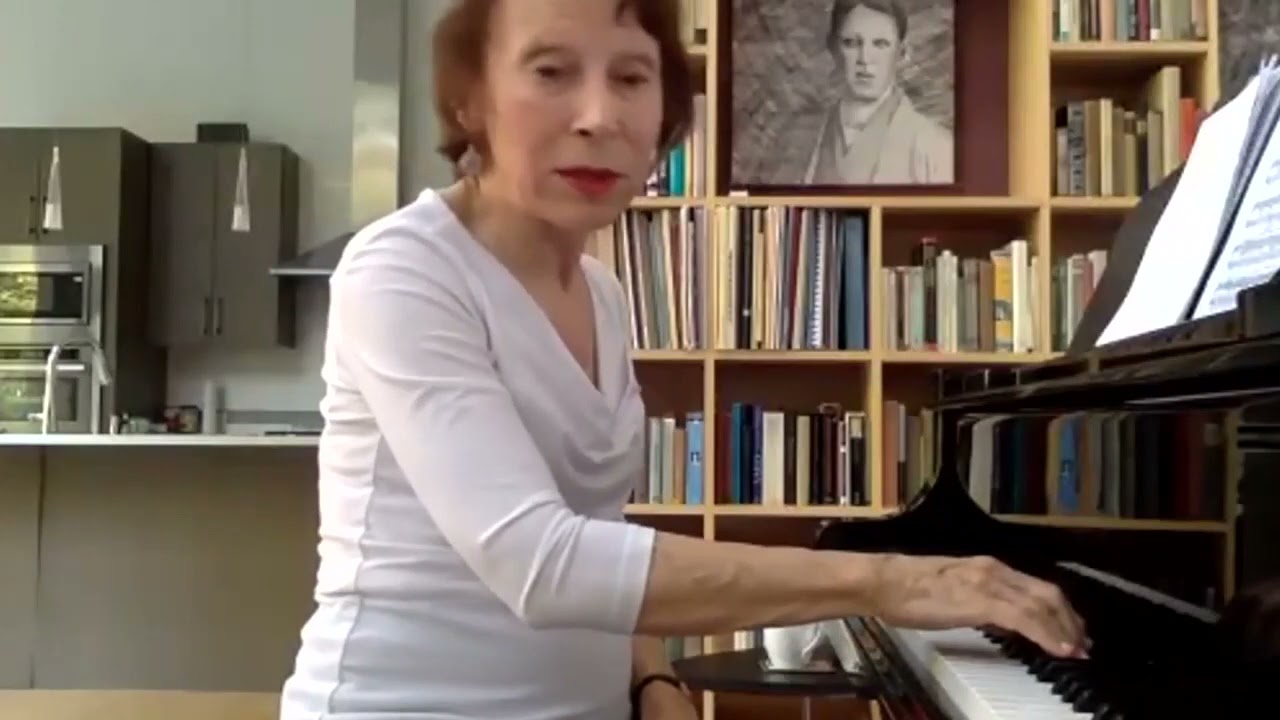
Arpeggios Part 3: Chopin “Winter Wind” etude.

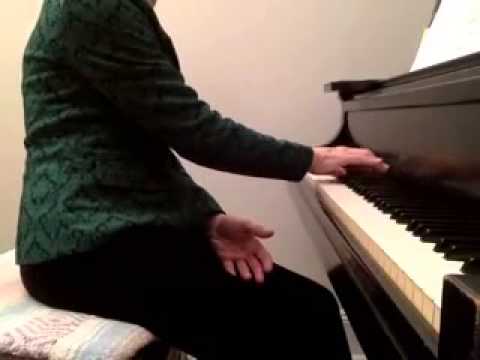
Playing arpeggios Part 2: shown in Chopin Etude Op. 10 no 8

Taubman Approach Symposium for piano and violin in Cambridge UK, this March!

Click here to read about the exciting two-day symposium on the Taubman Approach, held on March 23-24 2013. For the first time in the UK, Edna Golandsky (piano) and Sophie Till (violin) will work with pianists and violinists from all over the world.

The mission of the Golandsky Institute is to instruct musicians in the skills that enable them to realize their highest potential as performing artists. It also teaches them how to overcome technical limitations and recover from playing-related injuries. It is the leading institute for the Taubman Approach, an internationally recognised technique for the prevention and cure of the injuries, pain, discomfort and fatigue related to playing. The resulting physical knowledge provides the tools for tone production and musical expression.

For many years, the Taubman Approach has focused on the needs of pianists but for the first time in the UK , this ground breaking Symposium will apply the Taubman Approach to both piano players and violin players.

The experience of applying the Taubman Approach to the violin has opened an entirely new world of technical and musical possibilities for violinists. The combination of this approach with the clarity and thoroughness of its pedagogy is producing revolutionary results.

The intensive two-day Symposium will focus on the following:

  • Presentations on the principles and practical application of the Taubman Approach
  • Hands-on work dealing with physical/technical issues such as pain, numbness, fatigue and playing limitations, offering diagnostic tools and concrete solutions.
  • Intensive study to achieve solutions to problem passages in the repertoire.
  • Master classes addressing musical issues, such as tone production, colour. shaping and more
  • Separate workshops to cater for the different instruments: piano workshops with Edna Golandsky, and violin workshops with Sophie Till.
    Delegates can join either the piano or violin symposia, for one or two days, either as a participant or an auditor. Registrations for both the piano and violin symposia are now open. Places are strictly limited.

EdnaGolandsky9920 sophietill

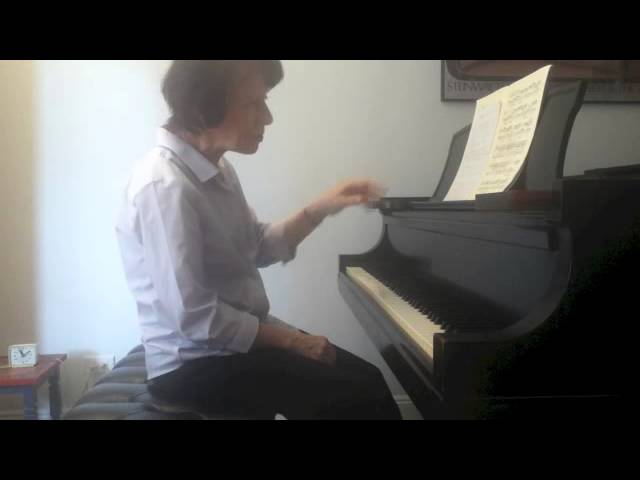
Playing arpeggios.

Follow

Get every new post delivered to your Inbox.

Join 411 other followers

%d bloggers like this: